When to Repair Your Awning Fabric (and When to Replace It)
TL;DR:
- Visible fading, tears, mould, and fraying are signs of fabric stress, not automatic proof that the whole cover needs replacing.
- If the waterproof and UV-resistant coating has gone, repair will not restore the cover’s protective function. Only replacement will.
- Widespread deterioration across multiple failure types is the clearest signal that replacement is more cost-effective than repeated repairs over time.
- Repairing early preserves the awning’s protective function and almost always costs less than letting damage escalate to a full replacement.
Malaysia’s climate, with persistent humidity, intense UV exposure, and seasonal rain, degrades awning fabric gradually and in predictable ways. By the time damage becomes visible, the fabric has often been under stress for some time. The instinct at that point is to assume the whole cover needs replacing. Often, it does not.
Awning fabric repair is the process of restoring a damaged cover through patching, re-stitching, or re-tensioning, without replacing the entire awning. Whether you are a homeowner or managing a commercial property, the right call depends on the type of damage, the condition of the underlying fabric, and how far deterioration has progressed.
This article works through each of those factors so the repair-or-replace decision becomes straightforward.
What Does Awning Fabric Damage Actually Look Like?
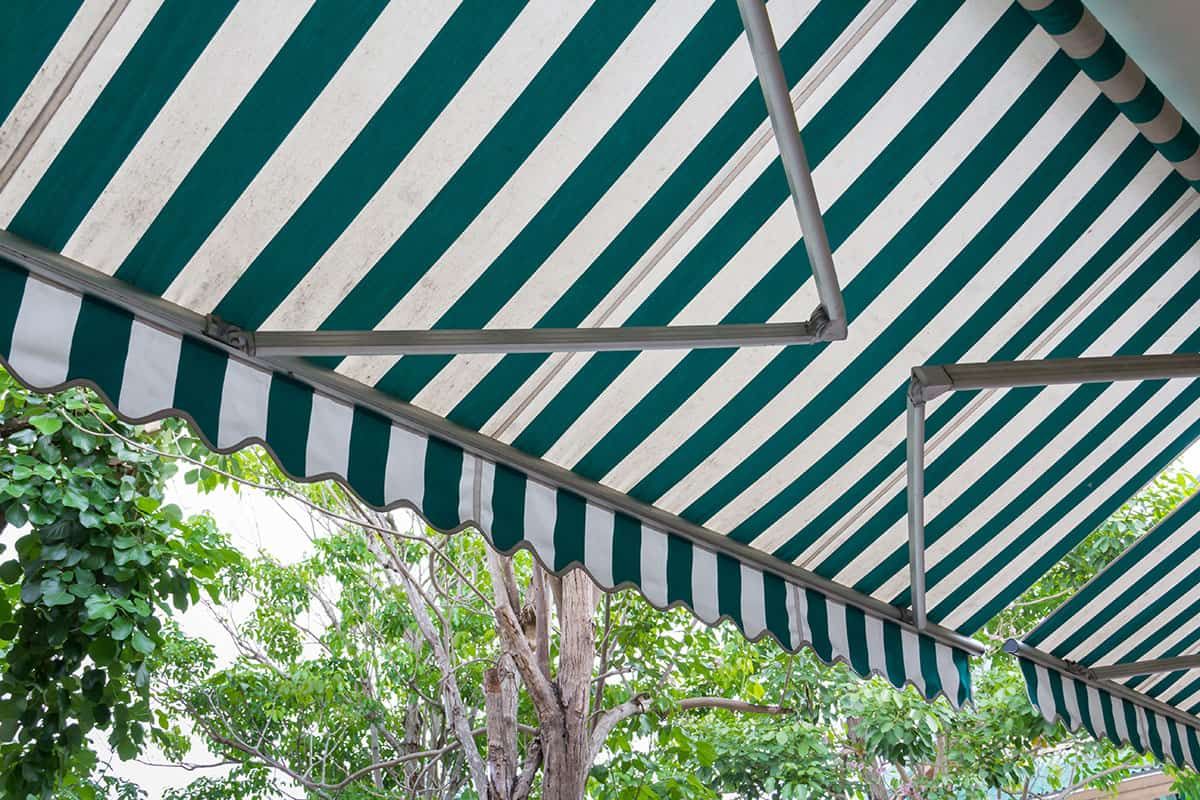
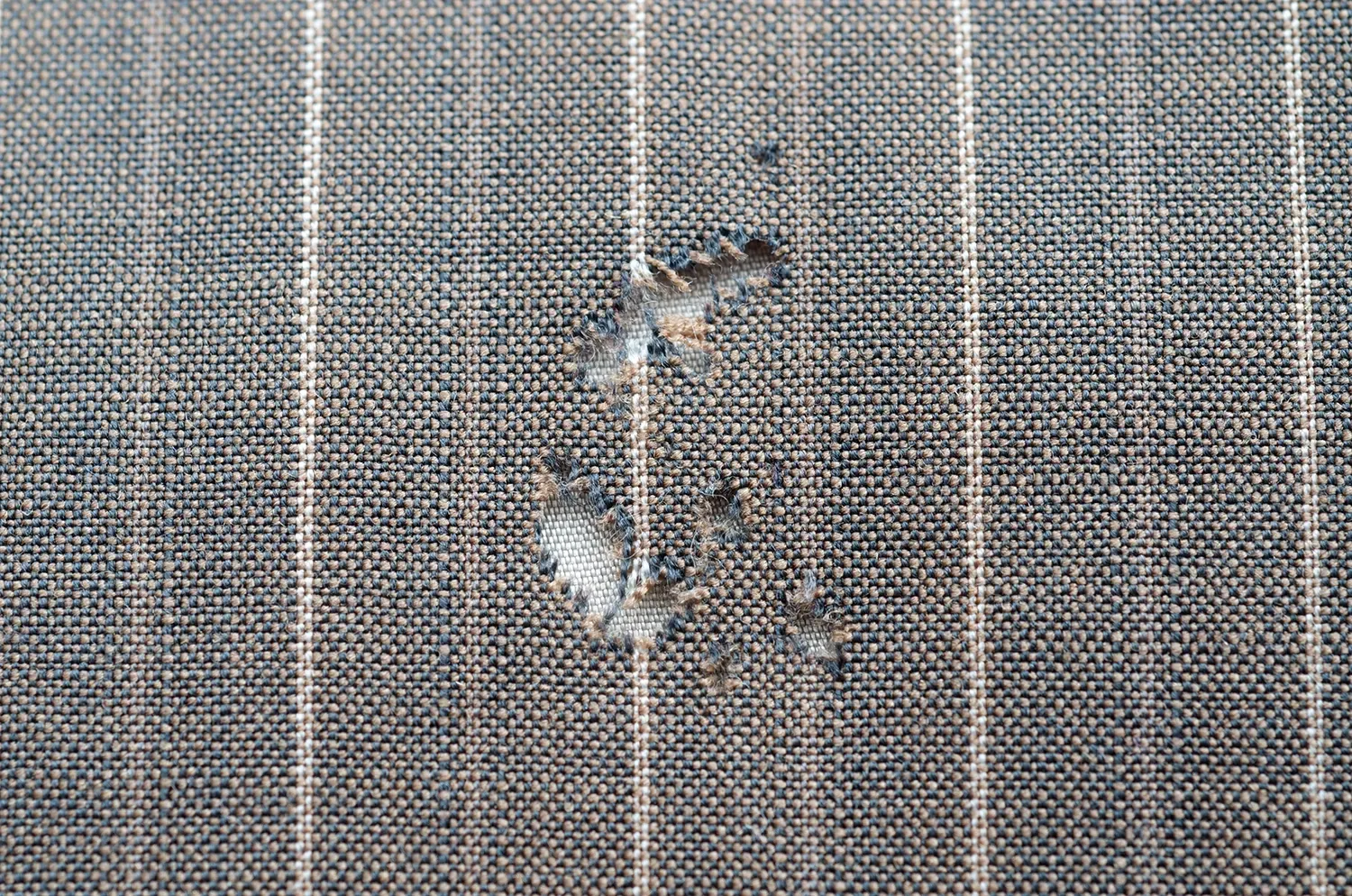
Awning fabric may fail in 4 ways: fading, tears, mould, and fraying. Each points to a different kind of fabric failure.
The table below sets out what is typically behind each one, and whether a fabric awning repair can address it:
| Damage Type | Typical Cause | Repair Possible? |
|---|---|---|
| Surface fading (partial) | UV exposure over time | Yes, for localised fading; uniform fading across the full surface may indicate end-of-life |
| Small tears or split seams | Age, tension, or sharp contact | Yes, awning canvas repair via patching or re-stitching is effective for localised tears |
| Mould patches on surface | Trapped moisture, poor ventilation | Yes, if mould has not penetrated the waterproof coating |
| Mould (deep penetration) | Long-term moisture exposure | No, once the waterproof layer is compromised the cover needs replacing |
| Minor fraying along edges | Seam breakdown or UV degradation | Yes, if contained to a small section of the edge |
| Brittle or cracking fabric | Advanced UV degradation | No, the material structure is no longer sound |
Acting early almost always costs less. Minor damage left unaddressed tends to escalate, and what starts as a repair job can become a full replacement.
Can Your Awning Fabric Be Repaired, or Is It Too Far Gone?
The question is whether the damage type falls within what awning fabric repair can reliably fix, and whether the underlying fabric structure is still sound enough to hold a repair.
| Damage Type | What You See | Repairable? | Notes |
|---|---|---|---|
| Small to medium tears | A clean tear across the fabric body; surrounding material still flexible and intact | Yes | Act before the tear reaches a seam or stress point, where surrounding fabric takes on more load |
| Loose or split seams | A seam beginning to separate along the panel edge | Yes | Re-stitch as soon as separation is noticed; a separating seam continues to run under wind pressure |
| Minor mould patches on the surface | Surface mould that lifts with professional cleaning | Yes, if surface only | Viable only if mould has not penetrated the waterproof coating beneath |
| Sagging fabric caused by lost tension | Fabric sagging between the arms of the frame | Yes, if fabric is structurally sound | Re-tensioning adjusts the fabric's draw without replacing the cover; not viable if sagging is caused by material breakdown |
Across all of these, the key question is the same: does the fabric still retain its waterproof and UV-resistant coating? If it does not, a repair will not restore the cover’s protective function. Only replacement will.
The Signs That Tell You It Is Time to Replace, Not Repair
Some damage is beyond what awning fabric repair can address. This is not a push toward the more expensive option, but the honest assessment a specialist would give you.
- Uniform Colour Loss Across the Full Surface: When fading runs across the entire cover, the UV-protective layer has broken down. A patch repair treats the symptom, not the failure.
- Brittle or Cracking Fabric: UV degradation leaves the material stiff and prone to cracking at flex points. Fabric in this condition will not hold a repair.
- Multiple Large Tears or Widespread Seam Failure: Multiple tears across different sections, or seam failure along the length of the cover, indicate the material has deteriorated broadly.
- Pervasive Mould That Cleaning Cannot Remove: Mould that has penetrated the waterproof coating and cannot be lifted by professional cleaning means the cover can no longer protect.
Repeated partial repairs on a fabric that is failing broadly will typically exceed the cost of a single replacement over time. If your cover shows more than one of these signs, the next practical step is to understand what fabric replacement involves before committing to further repair.
The signs above are clear at the extremes. A cover that is brittle, mouldy, and uniformly faded needs replacing. A single small tear on otherwise sound fabric does not. The cases in between are worth a second opinion. Send a photo to our WhatsApp, and you will get an honest read on where your awning sits.
When Does It Make More Sense to Replace Than Repair?
If the damage does not clearly point one way, these 4 questions will help you work it out:
- How extensive is the damage?
- How old is the fabric?
- Does the fabric still hold its waterproof and UV-resistant properties?
- Has the same area failed before?
On timing: a repair is typically completed in a single on-site visit. A full fabric replacement involves measuring, custom cutting, and fitting new material, which carries a longer lead time. Identifying damage early means the repair route stays open and disruption is minimal.
Fabric Types We Repair: Recasens, Acrylic Canvas, PVC, and Polyester Awning Fabrics
The repair service covers all major awning fabric types found in homes and commercial properties: Recasens acrylic, standard acrylic canvas, PVC (polyvinyl chloride)-coated polyester, and plain polyester.
Recasens acrylic, founded in Barcelona in 1886, is built for sustained UV exposure and outdoor durability. Its tighter weave and dimensional stability make it worth repairing with matched Recasens material; a mismatched repair shows in colour, texture, and long-term performance.
Stocking Recasens fabric locally means repairs are carried out with material that matches the original cover in colour, texture, and construction without lead time.
The same principle applies across all awning fabric types: the repair method has to suit the material. Here is how that breaks down:
| Fabric Type | Repair Method | Notes |
|---|---|---|
| Acrylic canvas | Patching with matched fabric; adhesive or stitched edges | Patches well |
| PVC-coated polyester | Heat-welded at the repair site | Produces a sealed join without stitching |
| Plain polyester | Re-stitching | More prone to seam failure; surface patching alone may not be sufficient |
| Recasens acrylic | Patching with stocked matched material | Preserves the cover’s appearance and performance |
Our Awning Fabric Repair Process: On-Site Assessment, Patching, Re-Tensioning, and Re-Stitching
Every awning fabric repair follows the same structured process, from the initial on-site assessment through to final sign-off. Here is what each stage involves:
- On-Site Assessment: The damage is assessed in person, covering the fabric condition, frame, mounting points, and coating integrity. This determines whether repair is viable and which method applies: patching, re-stitching, or re-tensioning.
- Repair: Carried out using matched fabric where possible. Where the frame or fixings need attention, these are covered under the awning system supply service. Every job is backed by a 5-year warranty on materials and workmanship.
- Sign-Off: The awning is checked for even tension, correct drape, and water run-off direction before the job is complete.
You will know what the work involves and what it costs before anything is agreed. If that sounds like what your awning needs, book an assessment with France Fabric Awning.
Where Do We Offer Awning Fabric Repair in KL and Selangor?
Awning fabric repair is available on-site across Kuala Lumpur and Selangor, including:
- Petaling Jaya
- Subang Jaya
- Shah Alam
- Klang
- Puchong
- Cheras
- Ampang
- Damansara
- Setapak.
We are based in Shah Alam, which means response times are short and every job is handled directly by our team. We do not subcontract or hand off to third parties. The same team that carries out the assessment carries out the repair, so nothing is lost between the diagnosis and the work.
For a job where the repair method depends on what the fabric looks and feels like in person, that continuity matters.
Frequently Asked Questions About Awning Fabric Repair
What Affects the Cost of Awning Fabric Repair in Malaysia?
Cost depends on the type and extent of damage, the fabric material, the repair method required, and your property location. The most reliable way to get an accurate picture before committing is to have a specialist look at it directly.
Can Torn Awning Fabric Be Repaired?
Small to medium tears can, in most cases, be repaired through professional patching using matched fabric. Very large tears, or tears near stress points such as edges or mounting fixings, may require full fabric replacement instead.
How Do I Know Whether to Repair or Replace My Awning Fabric?
Work through the self-assessment checklist in the section above. If multiple factors (extent of damage, fabric age, coating condition, and repeat failure) point toward end-of-life, replacement is the better long-term decision.
How Long Does Awning Fabric Last?
Quality awning fabric in Malaysia’s climate is generally estimated to last between 5 and 10 years, with Recasens acrylic typically outlasting standard polyester due to its tighter weave and fade-resistant construction.
Share your specific fabric type and exposure conditions to confirm with our specialist.
Do You Repair Recasens Awning Fabric?
Yes. Recasens fabric is stocked locally and repairs use matched material, so the repaired section integrates with the existing cover in colour and texture rather than appearing as a visible patch.
Book Your Awning Fabric Repair Assessment in KL or Selangor
If you have worked through this article and recognised your awning in any of the sections above, the next step is straightforward. An on-site assessment with France Fabric Awning will tell you plainly what the damage means, whether repair is the right call, and what the work involves before you commit to anything.
We cover Kuala Lumpur and Selangor, carry Recasens fabric locally, and back every job with a 5-year warranty on materials and workmanship. You will know what you are getting before anything begins.
Contact France Fabric Awning to book your awning fabric repair assessment.